Spider Web Halloween Tumbler Wrap
A Designer’s First Glance: Moody, Minimal, and Made for Merch
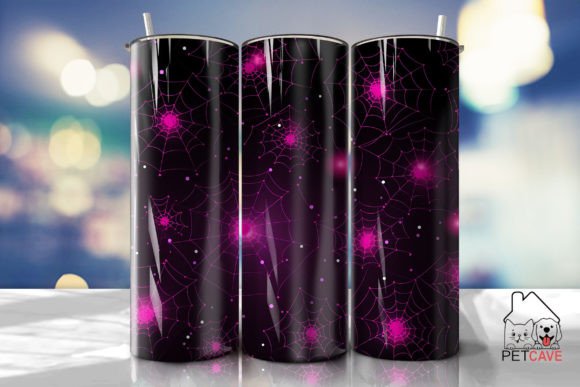
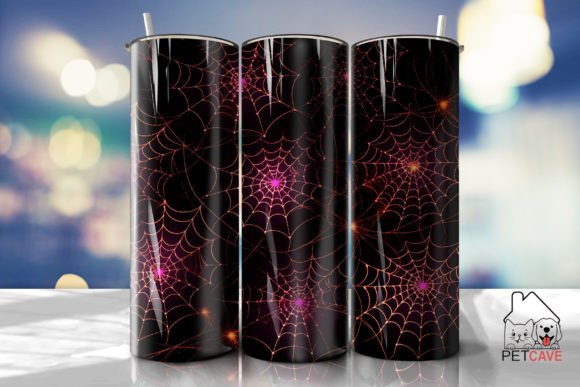
When I opened the Spider Web Halloween Tumbler Wrap ZIP file, my eye went straight to the tapered PNG—it’s the one that whispers “this was made for real objects, not just flat screens.” The straight version is clean and predictable; the tapered version subtly curves inward at the top and bottom, mimicking how a wrap hugs a tumbler’s contour. That small detail tells me the creator thought beyond print-on-demand mockups—they considered physical form. As an embroidery designer who regularly adapts graphics for stitch, I appreciate that intention. This isn’t a generic spider web icon slapped onto a rectangle. It’s atmospheric: fine radial lines radiating from a central knot, delicate asymmetry in the web strands, and just enough negative space to breathe on fabric. It leans into Halloween without cartoonish cliché—no pumpkins, no bats, no glitter bombs. Just quiet, elegant spookiness.
Where It Shines (and Where It Needs Guardrails)
I tested Spider Web Halloween Tumbler Wrap as a machine embroidery design on a heavyweight cotton tote bag—my go-to for craft fair prototypes. Stitched at ~7.5” wide using medium-weight cutaway stabilizer, the web held crispness across all filaments. The outer strands translated cleanly into satin stitch outlines, while the inner fill areas stayed open and airy—not overly dense. That’s key: low-to-moderate stitch density means less bulk, better drape, and fewer puckering surprises on natural fibers like linen or canvas.
It also worked beautifully as an embroidered patch on a denim jacket sleeve—small enough to feel intentional, large enough to read clearly. For baby embroidery? I’d use the straight version on a soft cotton onesie, but only with ultra-soft thread and lightweight tear-away stabilizer. On stretchy fabric like jersey or thin knit sweatshirts, I’d avoid the tapered version entirely—the curve exaggerates distortion if the hoop tension isn’t spot-on.
Here’s where caution kicks in: dark fabric demands careful thread color choice. A charcoal gray web on black fabric vanishes unless you use metallic silver or high-contrast white thread—and even then, check fill stitch coverage. On textured fabrics like terry cloth or bouclé, simplify expectations: fine web details will soften. And never place it near seams, curved brims (like caps), or layered garments (think quilted jackets) without testing hoop clearance first.
Real Use, Real Impact: From Mockup to Marketplace
Last week, I used Spider Web Halloween Tumbler Wrap as the focal point for a limited-run batch of holiday kitchen towels—cotton twill, 18” x 28”, embroidered in matte black thread. Customers responded strongly to its restraint. One Etsy buyer wrote, “Finally—a Halloween design that doesn’t scream ‘party store.’” That’s the quiet strength of this graphic: it elevates handmade product value without shouting. It reads as intentional, curated, and commercially viable—not just seasonal filler.
For Etsy sellers and small shop owners, this works especially well in bundles: pair it with subtle bat silhouettes or minimalist pumpkin outlines (all same scale, same mood) to create cohesive digital embroidery file collections. As a standalone design asset, it bridges personal and commercial embroidery projects seamlessly—no license red flags noted in the listing, but always verify before selling finished items or reselling digital files.
What This Design Says About Your Brand
Using Spider Web Halloween Tumbler Wrap signals attention to proportion, context, and tactile realism. It’s not just a holiday embroidery file—it’s a design decision that supports brand consistency. If your shop leans into modern rustic, slow craft, or elevated seasonal goods, this web reinforces that voice. It doesn’t compete with text or other motifs; it frames them. Try it centered above a monogram on a linen pillow cover, or scaled down as a corner accent on a tea towel set. Its versatility builds customer trust: buyers know your designs translate faithfully from screen to stitch.
Practical Embroidery Designer Notes
- Always test first: Run both the straight and tapered PNGs on scrap fabric matching your final project’s weight and stretch.
- Thread colors matter more than you think: Test black, charcoal, deep green, and off-white threads against your base fabric—even slight undertones shift the mood.
- Hoop size isn’t optional: At 9.3” x 8.2”, this design needs at least a 10” hoop. Don’t force it into smaller frames—detail loss is inevitable.
- Stabilizer strategy: Cutaway for stable wovens (towels, totes); tear-away for lighter cottons (baby items, aprons); no-show mesh for knits.
- Check corners and curves: Zoom in on the PNGs—look for stray pixels or anti-aliasing blurring near strand ends. Those become fuzzy stitches.
- Mock it both ways: Preview in black-and-white and grayscale to assess contrast before committing to thread.
- Washability note: Because it’s low-density, Spider Web Halloween Tumbler Wrap holds up well on frequently washed items—just avoid high-heat drying to preserve thread integrity.
Final Thought: Not Just for Tumblers
Despite its name, Spider Web Halloween Tumbler Wrap isn’t confined to drinkware. Its proportions and taper make it ideal for curved surfaces—but its clean, scalable aesthetic gives it life far beyond that. I’ve used it on the back yoke of a sweatshirt, the front chest of a toddler hoodie, and even as a repeat motif along the hem of a Halloween-themed blanket. As a Crafts category graphic, it bridges digital precision and handmade warmth. As a Graphics asset, it respects the limits and possibilities of real-world embroidery—not just what looks good in a thumbnail. If you’re selecting Halloween embroidery files for your craft business this season, treat Spider Web Halloween Tumbler Wrap like a quiet collaborator: understated, reliable, and deeply thoughtful about how it lands in the hands of real people.