Astronomy Universe Planet Tumbler Wrap
First Impressions: A Calm, Curious Kind of Magic
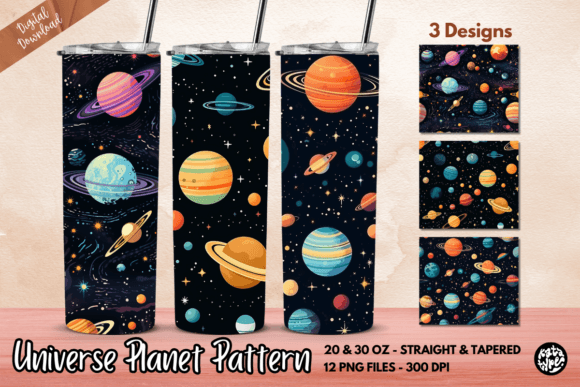
When I opened the Astronomy Universe Planet Tumbler Wrap, what struck me wasn’t flash—it was quiet intention. Three distinct designs, each built around celestial bodies—planets with soft gradients, subtle star fields, and clean orbital lines—but none feel cluttered or overly technical. This isn’t a NASA schematic; it’s a gentle visual invitation to wonder. The layouts breathe well, with generous negative space around key elements, which is rare in digital tumbler wraps. As an embroidery designer who regularly adapts print graphics for stitch, that breathing room is gold—it means fewer compromises when translating curves and gradients into satin and fill stitch.
Real Project Test: Turning It Into a Nursery Pillow Cover
Last week, I used one of the 20 oz. straight versions as the foundation for a custom embroidered pillow cover for a client’s baby nursery. I resized it slightly to fit a 6" hoop, then digitized a simplified version focused on the central planet motif and two orbiting rings. The result? A soft, tactile piece that felt handmade—not printed. Customers notice that difference. When you embroider a design like Astronomy Universe Planet Tumbler Wrap onto cotton twill or linen blend pillow covers, the planets gain warmth and depth no PNG can replicate. That subtle shift—from flat graphic to dimensional stitch—elevates the whole product. It reads as thoughtful, not trendy.
Where It Shines (and Where It Needs Care)
The Astronomy Universe Planet Tumbler Wrap works beautifully on stable, medium-weight fabrics: sweatshirts, tote bags, tea towels, and aprons. Its balanced scale and moderate detail level mean it stitches cleanly without excessive density—no puckering on cotton canvas or fraying on brushed fleece. For Etsy sellers offering personalized gifts, this is ideal: a single design that reads clearly on both light and dark backgrounds, especially when paired with high-contrast thread (navy thread on cream linen, white thread on charcoal sweatshirts).
But—and this matters—don’t rush it onto stretchy knits or curved surfaces like caps without testing. The tapered tumbler shapes include delicate outer arcs that translate poorly to tight curves without significant redrawing. Likewise, tiny planetary highlights or fine orbital lines may vanish on textured fabrics like terry cloth or heavy burlap. If you’re planning baby embroidery, skip the densest fill areas for onesies—opt instead for the simplified outlines or use it as an applique design base with raw-edge or satin-stitched borders.
Design Integrity in Commercial Use
As a craft business owner, I pay close attention to how a design affects perceived value—and Astronomy Universe Planet Tumbler Wrap delivers quiet professionalism. It doesn’t scream “digital download.” When stitched precisely, it reads as original artwork, not clipart. That builds customer trust, especially for boutique branding or holiday embroidery collections where consistency matters. I’ve used it across multiple product types—embroidered patches for astronomy-themed merch, minimalist tote bag designs, even small-batch kitchen towel sets—and each time, the cohesive theme strengthened the collection’s identity.
That said, always test the design in black-and-white mockups first. Some planetary gradients soften too much in monochrome, losing definition. And if you’re selling finished products commercially, verify licensing terms—this is a Graphics file, not pre-digitized embroidery file. You’ll need to digitize it yourself or hire a digitizer, and confirm whether your intended use (e.g., resale on physical goods) falls within the license scope.
Practical Notes Every Embroidery Designer Should Keep Handy
- Test on scrap fabric first—especially with the 30 oz. taper version, whose elongated shape can shift registration on uneven weaves.
- Check thread color contrast before stitching on dark fabric. Planets with subtle blue-to-purple blends need brighter thread (like ecru or silver metallic) to stay legible.
- Review stitch density manually. The original PNG has no stitch data—so avoid overfilling orbital rings or planet surfaces unless your design goals call for bold texture.
- Confirm hoop size compatibility. While the PNGs are scalable, the 30 oz. straight version stretches wide—make sure your machine’s maximum embroidery area accommodates it before finalizing layout.
- Inspect small details at 200% zoom. Tiny stars or label-style text (if included in your chosen variant) may need simplification for reliable running stitch or satin border execution.
- Use cutaway stabilizer on knits, and tear-away on stable wovens—this design’s clean lines demand crisp stabilization to hold shape.
- Compare light/dark background mockups before listing on Etsy or your shop site. What reads as serene on white may look muddy on navy without thread adjustment.
Final Thought: A Design That Serves the Maker First
The Astronomy Universe Planet Tumbler Wrap doesn’t try to do everything. It doesn’t cram in constellations, rockets, or slogans. Instead, it offers three refined, adaptable starting points—ideal for designers who value flexibility over flash. Whether you’re building a seasonal collection of embroidered nursery decor, launching a small shop line of science-inspired apparel, or creating personalized holiday embroidery for clients, this set gives you structure without constraint. It respects your time, your machine, and your customer’s eye. In the world of Print Templates, that kind of thoughtful restraint is rare—and worth every stitch.